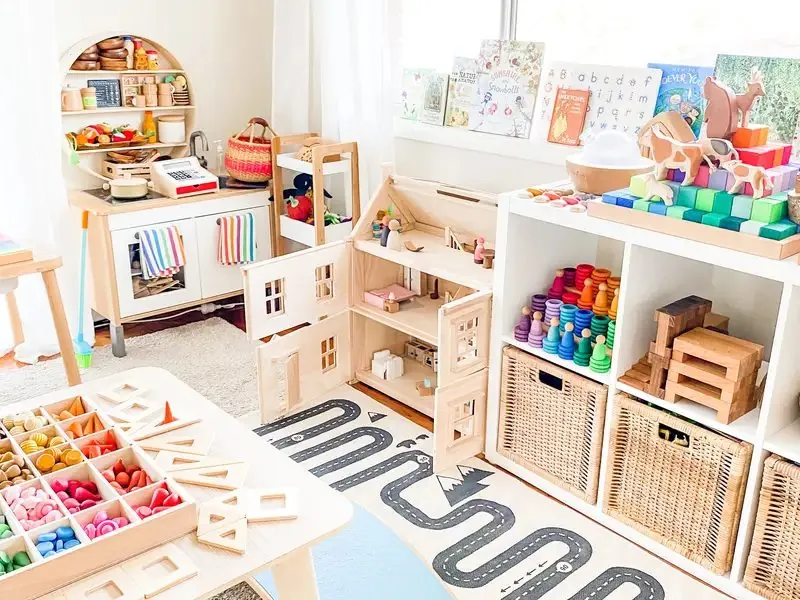
Toy rotation means keeping only part of your child's toys out at a time and storing the rest out of sight, then swapping every week or two. When toys come back after a break, they feel new again.
Why it works
- Less overwhelm. A packed shelf makes it hard to choose. A few clear options invite deeper play.
- Longer play. Children tend to stay with a toy longer when there's less competing for their attention.
- Easier clean-up. Fewer toys out means a reset your child can actually manage.
- Less buying. Rotated toys feel fresh, so the urge to buy something new fades.
How to set it up
1. Sort toys into categories
Group by type of play: building, pretend play, vehicles, puzzles and games, art and music, and small-world play such as animals and figures.
2. Build sets
Divide each category across three or four sets, so every set has a little of everything. One set goes out, and the rest are stored.
3. Decide how much to keep out
A good starting point is enough to fill your open shelves without stacking, often 8 to 12 toys for a toddler, plus books and art supplies. Watch what gets played with and adjust.
4. Store the rest out of sight
Use labeled, lidded bins in a closet, basement or high shelf. Out of sight is the key; if your child can see the stored toys, rotation loses its magic.
5. Swap on a schedule
Every one to two weeks, swap the sets. Keep a true favorite out if it's still in heavy use. Rotation should feel like a treat, not a punishment.
What stays out all the time
Books, basic art supplies, a few open-ended staples like blocks, and any comfort items. Many families also keep one styled invitation to play set up and change it with each rotation.
We set up toy rotations as part of every playroom organization visit in Bethesda and nearby.